Holland Lop Rabbit Colors Explained: Harlequin, Magpie, Tricolor, and Tortoise

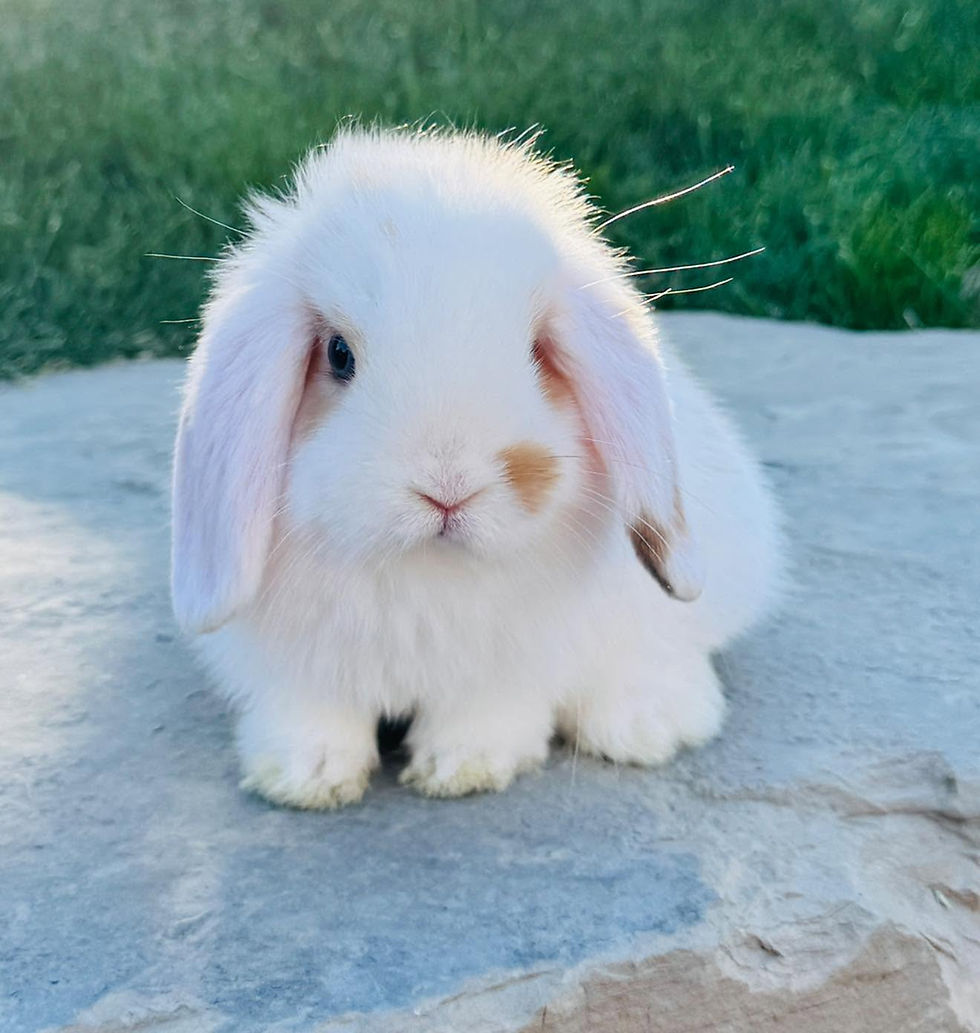
One of the reasons Holland Lop rabbits are so popular is the incredible variety of colors and patterns found within the breed. While health, temperament, and structure are always the most important considerations, many families fall in love with a particular color long before they choose a rabbit.
At Reynolds Family Farms in Nampa, Idaho, we raise pedigreed Holland Lop rabbits and enjoy helping families learn about the unique colors and genetics that make each rabbit special.
Why Do Holland Lop Rabbit Colors Matter?
Holland Lop rabbit colors are more than just appearance. Understanding color genetics helps breeders make informed decisions about future pairings and allows them to better predict the colors that may appear in upcoming litters. It also is important if you are trying to show as many colors are not accepted by the ARBA. If you are looking to show professionally or for 4H rabbits making sure your breeder is educated in rabbit colors is important because a miscolored toe could be the difference between a perfect rabbit and a disqualified one. For rabbit owners, learning about colors adds another layer of appreciation for this amazing breed.
Harlequin Holland Lop Rabbits
Harlequin (AKA Japanese) rabbits display alternating bands or patches of color across their body, creating one of the most recognizable patterns in the rabbit world.
Harlequins are popular among rabbit enthusiasts because of their unique markings and colorful appearance. Many breeders use Harlequin genetics as part of their long-term breeding programs to create a wide variety of color combinations.
Harlequins are caused by the e(j) gene in the sequence of genetics. Unlike the typical diminutive (e) gene that removes the black pigment entirely leaving only the orange, the e(j) gene causes the orange tones to separate from the black-based tones creating the patchy/stripy pattern. A basic Black Harlequin’s genes look something like: A_B_C_D_e(j)_. As long as the E gene is the diminutive (e) with the (j) attached (Known as the Japanese gene) and the C gene stays in its dominant form it will create a variation of Harlequin.
There are many variations of Harlequin including, Black/Orange, Chocolate/Orange, Blue/Cream, and Lilac/Fawn.
Magpie Holland Lop Rabbits
Magpie rabbits are closely related to Harlequins but feature a white base color with darker markings. Magpies are a variation of Harlequin that occurs when the C gene is diminutive cchl or cchd which removes all brown and orange pigment from the coat.
These rabbits often display striking contrast and beautiful patterns.
Our doe Princess Leia is a Sable Magpie Holland Lop and represents an important part of the color genetics within our rabbitry.
Tricolor Holland Lop Rabbits
Tricolor Holland Lop rabbits are among the most eye-catching rabbits in the breed. They combine white, black, and orange coloring into a beautiful pattern that is unique to each rabbit.
Tricolors are another variation of Harlequin that occurs when Harlequins have the En gene causing them to be “broken”.
Our doe Pomni is a Tricolor Holland Lop and one of the foundation rabbits of our breeding program. The featured photo in this article shows Pomni before joining Reynolds Family Farms in Nampa, Idaho.
Tricolors are highly sought after because no two are exactly alike.
Tortoiseshell Holland Lop Rabbits
Tortoiseshell AKA Tort is another popular Holland Lop color.
These rabbits feature rich dark shading combined with warm orange coloring on their back and are admired for their beautiful appearance.
Tortoiseshell occurs only when a self rabbit: the diminutive of A (aa), has the diminutive E gene separated from the Japanese gene.The diminutive e tries to remove the black pigment from the coat but interacting with theself gene causes it to miss the belly and part of the face causing the Tortoiseshell pattern. A Black Tort for instance, its genes would look like:
aa B_ C_D_ ee.
Torts come in 4 flavors Black, Chocolate, Blue, and Lilac.
Our future herd sire Kokomo is a Black Tort Holland Lop with an exceptional pedigree that includes championship bloodlines from multiple generations.
How Genetics Influence Rabbit Colors
The colors seen in Holland Lop rabbits are the result of genetics passed down through generations.
By studying pedigrees and understanding color inheritance, breeders can make thoughtful decisions about future pairings. While color is exciting, responsible breeders always prioritize health, temperament, structure, and overall rabbit quality above appearance alone.
Holland Lop Rabbits at Reynolds Family Farms
Reynolds Family Farms is a family-run farm in Nampa, Idaho raising pedigreed Holland Lop rabbits. Our breeding program focuses on healthy rabbits, excellent temperaments, beautiful colors, and responsible breeding practices.
We proudly serve families throughout Boise, Meridian, Eagle, Kuna, Caldwell, Star, Middleton, and the greater Treasure Valley.
If you would like to learn more about our rabbits, upcoming litters, or breeding program, visit our Holland Lop Rabbits page or contact Reynolds Family Farms directly.


Comments